The truly powerful story isn't just told; it's understood, dissected, and appreciated long after the final page turns or credits roll. For anyone delving into the heart of a narrative, mastering the art of the Plot Summary & Review is an indispensable skill. It’s how we bridge the gap between experiencing a story and thoughtfully analyzing it—providing context, sparking discussion, and helping others decide if a journey is worth embarking upon. But what makes a summary truly useful, and a review genuinely insightful? It's more than just rehashing events; it's about precision, clarity, and thoughtful critique.
At a Glance: Key Takeaways for Mastering Plot Summary & Review
- Summary vs. Recap: A plot summary is concise and highlights major beats; a recap details every scene.
- Summary's Purpose: To provide context and a clear understanding of the core narrative, not to reproduce the emotional experience.
- Objective Voice: Summaries are strictly factual, written in the narrative present tense, avoiding personal commentary.
- Concise Length: Aim for specific word counts (e.g., 400-700 words for novels/films) to maintain focus.
- Review's Role: Builds on the summary by offering critical analysis, interpretation, and subjective evaluation.
- Structured Analysis: Effective reviews delve into themes, character development, pacing, and overall impact.
- Evidence-Based: Support review claims with specific examples from the work itself.
- Spoilers: For summaries in an analytical context (like an encyclopedia), spoilers are inherent and not warned against. For public-facing reviews, discretion might be needed.
The Core Distinction: Summary, Recap, and Review
Before we dive into the nuts and bolts, let’s clarify the fundamental differences between these three often-interchanged terms. Understanding these distinctions is paramount for anyone aiming for effective story analysis.
Plot Summary: The Skeleton of the Story
A plot summary is the distilled essence of a narrative. Think of it as the skeletal structure—it shows the core framework, the major bones, and how they connect. Its primary goal is to provide a comprehensive, yet concise, overview of the main events, characters, and conflicts. It answers the question: "What generally happened?"
Crucially, a plot summary is:
- Objective: It presents facts about the story's progression without personal opinion or emotional language.
- Concise: It omits minor subplots, excessive detail, and repetitive actions. The focus is on significant story beats that drive the narrative from situation A to B.
- Contextual: It offers readers enough information to understand the story's arc, characters' motivations, and the ultimate resolution.
When you're writing a plot summary for an encyclopedic entry or an academic analysis, it functions as foundational information upon which deeper discussions are built.
Story Recap: The Scene-by-Scene Playback
In contrast, a story recap is far more detailed. Imagine watching a sports highlight reel versus replaying the entire game. A recap attempts to cover most, if not all, major scenes, often in chronological order, sometimes even reproducing dialogue or specific emotional moments. It's often found in "previously on" segments for TV series or detailed breakdowns for fan communities.
While a recap has its place—perhaps refreshing memory before a new season or diving deep into fan theories—it is generally too long and granular for comprehensive analysis. It strives to reproduce the experience, whereas a summary aims to explain it.
Story Review: The Critical Lens
A story review moves beyond merely outlining events. It's where critical thinking truly comes into play. A review takes the framework provided by a summary and layers on interpretation, evaluation, and subjective opinion. It asks: "How well did the story achieve its goals? What does it mean? Who might enjoy it, and why?"
A strong review will:
- Analyze: Explore themes, character development, narrative structure, pacing, writing style, or directorial choices.
- Interpret: Discuss symbolism, subtext, and the deeper implications of the plot.
- Evaluate: Offer a reasoned judgment on the quality, impact, and originality of the work.
- Support: Back up all claims and opinions with specific examples from the story itself.
The synergy between a plot summary and a review is powerful. The summary provides the necessary groundwork, ensuring your audience understands what you're talking about, while the review offers the critical insights that make your analysis truly valuable.
The Art of the Plot Summary: Stripping Down to the Essentials
Crafting an effective plot summary is more challenging than it might seem. It requires a laser focus on what truly matters, an ability to distill complexity, and a commitment to objectivity.
The Purpose: Providing Context, Not Experience
Remember, your plot summary isn't trying to make someone feel what it was like to read or watch the story. Its job is to furnish the reader with the narrative context needed to understand subsequent discussions or critiques. You're building a factual scaffold.
The Golden Rule: Thorough Yet Concise
This is the tightrope walk of summary writing. You need enough detail to make the story coherent and complete, but not so much that it becomes bogged down in minutiae. Every sentence should contribute to the reader's understanding of the core narrative arc. If a detail isn't essential for grasping the plot, characters, or major themes, it likely doesn't belong.
Narrative Present: Your Standard Tense
For summaries, especially in academic or encyclopedic contexts, the convention is to use the narrative present tense. This gives the summary an immediacy, as if the events are unfolding right now.
- Example (Incorrect): Victor Frankenstein abandoned his creation.
- Example (Correct): Victor Frankenstein abandons his creation.
This consistent tense helps maintain a uniform, authoritative voice throughout.
Focus on Progression: From Situation A to B
Instead of detailing every single step, aim to summarize the progression of events. What leads from one significant turning point to the next? What is the cause, and what is the effect?
Consider the summary of Mary Shelley’s Frankenstein. It effectively moves from Victor's creation to the creature's abandonment, then to William's murder, Justine's execution, the creature's demand for a companion, the destruction of the female, Henry's murder, Elizabeth's murder, and finally Victor's relentless pursuit and death, followed by the creature's remorse. Each step is a major beat, essential for understanding the narrative's tragic trajectory.
What to Include (and What to Omit)
Include:
- Main Characters: Their names, key descriptors, and primary motivations.
- Setting: Where and when the story primarily takes place (if relevant to the plot).
- Inciting Incident: The event that kick-starts the main conflict.
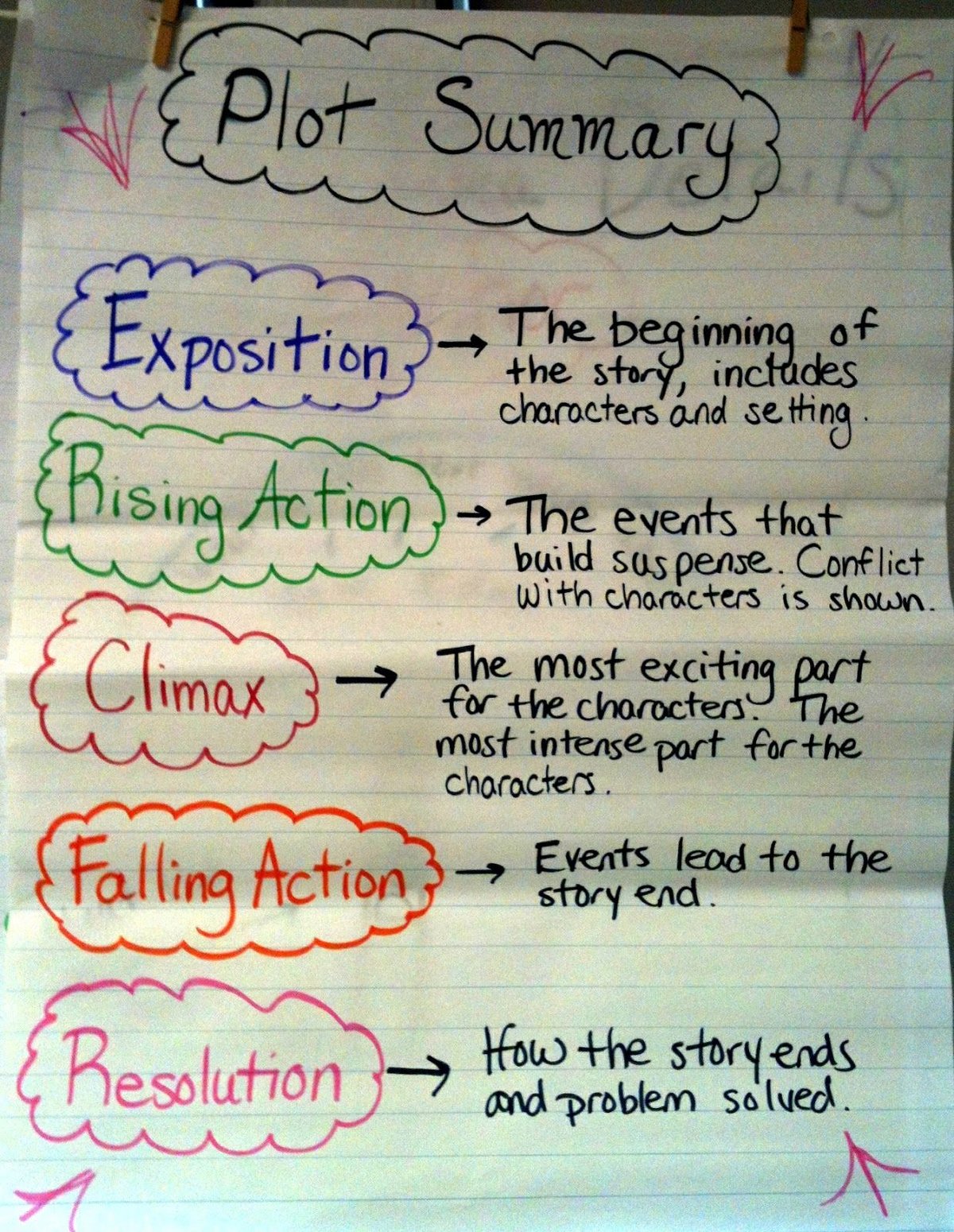
- Rising Action: Key events that build tension and develop the conflict.
- Climax: The peak of the conflict, the moment of greatest tension or turning point.
- Falling Action: Events that lead from the climax to the resolution.
- Resolution: How the primary conflict is resolved, or the ultimate outcome for the characters.
- Vital, Iconic Moments: Those scenes universally recognized as crucial to the story's identity (e.g., "Luke, I am your father").
Omit:
- Minor Characters: Unless they significantly alter the main plot, they can be excluded.
- Subplots: If they don't directly impact the main narrative progression, keep them out.
- Excessive Dialogue: Summarize conversations rather than quoting extensively.
- Detailed Scene Descriptions: Focus on what happens, not how the scenery looked.
- Emotional Impact or Reader Experience: Your summary isn't about making the reader feel sad or excited; it's about conveying the factual sequence of events.
- Personal Commentary or Interpretation: Save this for your review.
Reordering for Clarity: When a Non-Linear Story Needs a Linear Path
Some narratives play with time, employing flashbacks, flash-forwards, or non-chronological structures. In a summary, your goal is clarity. It's perfectly acceptable, and often advisable, to reorder events chronologically to make the plot easier to follow. Phrases like "The story begins in..." or "Earlier, [character] experienced..." can help bridge these narrative shifts. The Wikipedia guidelines explicitly endorse this, ensuring your summary remains accessible.
Length Guidelines: Keeping It Tight
While there's no hard-and-fast rule, industry and academic standards offer helpful benchmarks to prevent "plot bloat":
- Films and Novels: Aim for 400 to 700 words for full-length works. This range allows for sufficient detail without overwhelming the reader.
- TV Series (Episode List Entries): A concise 200 words maximum.
- TV Series (Standalone Episode Articles): Up to 400 words.
- Video Games: Approximately 700 words, reflecting their often complex narratives.
Remember, a concise summary highlights major plot elements more effectively.
Step-by-Step: Writing Your Plot Summary
Let's break down the process, drawing inspiration from the Little Red Riding Hood example:
- Formulate a One-Sentence Description: Start with a succinct statement for your lead.
- Example: Frankenstein is the tragic story of Victor Frankenstein, a brilliant scientist who creates a sentient being and subsequently abandons it, leading to a relentless pursuit of vengeance and mutual destruction.
- Identify Major Elements: What are the core components from your opening sentence that need explanation?
- Brilliant scientist (Victor Frankenstein), sentient being (the Creature), abandonment, vengeance, mutual destruction.
- Introduce Main Characters: Provide their names, brief descriptions, and crucial motivations.
- Example: Robert Walton, an explorer, finds a dying Victor Frankenstein in the Arctic and hears his tale. Victor, a young scientist, becomes obsessed with creating life after a pleasant upbringing. His creation, a monstrous but sentient being, seeks acceptance and later revenge after being rejected. Key figures like Elizabeth Lavenza and Henry Clerval are also introduced through Victor’s narrative.
- Describe the Core Encounter/Plot Progression: Detail the key events chronologically (or reordered for clarity), focusing on conflict, rising action, climax, and falling action. Provide context without excessive detail. Include vital, iconic moments.
- Example (abridged from the ground truth): Victor brings the creature to life but, horrified, abandons it. This act of rejection fuels the creature's isolation and hatred. When Victor's younger brother William is murdered, Victor suspects his creation. Justine Moritz is wrongly executed for the crime, intensifying Victor's guilt. The creature confronts Victor, admitting to William's murder, and demands a female companion. Victor reluctantly agrees but destroys the unfinished companion, leading the creature to vow revenge. The creature then murders Henry Clerval and, later, Elizabeth on Victor's wedding night.
- Conclude the Narrative: Bring the story to its definitive end, fulfilling all elements laid out in your initial description.
- Example: Victor vows to hunt the creature, pursuing it to the Arctic where he eventually dies aboard Walton's ship. The creature, finding Victor dead, expresses profound remorse and declares its intention to end its own suffering, disappearing into the ice.
Beyond the Plot: Crafting a Meaningful Review
Once you have a solid summary, you're ready to transition into the critical territory of the review. This is where you move from "what happened" to "what it means" and "how well it works."
Moving from "What" to "Why" and "How"
A review elevates discussion. It's your opportunity to engage with the story on a deeper intellectual and emotional level, offering insights that might not be immediately apparent to every reader.
Components of a Strong Review
A compelling review typically explores several analytical avenues:
- Themes and Symbolism: What deeper ideas does the story explore (e.g., love, loss, justice, ambition, identity)? How does it use symbols, metaphors, or allegories to convey these themes?
- Character Development: Are the characters believable and consistent? Do they undergo significant changes, and are these changes earned? How do their motivations drive the plot?
- Pacing and Structure: Is the story well-paced, maintaining tension and interest? Is the narrative structure effective (e.g., linear, non-linear, episodic)? Does it enhance or detract from the overall impact?
- Writing/Direction/Performance: Depending on the medium, you might analyze the author's prose, the director's vision, the cinematography, musical score, or the actors' performances. How do these craft elements contribute to the story's success or failure?
- Overall Impact and Recommendation: What lasting impression does the story leave? Who is the ideal audience for this work? Would you recommend it, and why? Be clear about your overall judgment. Perhaps after enjoying the depth of a classic, you might want a lighter fare like Watch Alvin and the Chipmunks: Chipwrecked for a change of pace; your review should indicate that.
Navigating Spoilers in Reviews
Here’s a crucial distinction:
- For pure plot summaries (especially in encyclopedic or academic contexts): Spoilers are inherent. The goal is to provide full context, and withholding key plot points would undermine that. No spoiler warnings are necessary in these settings.
- For public-facing reviews (e.g., a blog, newspaper, or social media): The etiquette changes. Most general audiences appreciate a heads-up if significant plot twists or endings are about to be revealed. Many reviewers opt for a "spoiler-free" initial impression, then clearly mark a "spoiler section" for deeper analysis. Your approach should align with your audience's expectations.
Supporting Your Claims: Evidence is Everything
A review is not just a collection of opinions; it's a reasoned argument. Every claim you make about the story's quality, impact, or thematic depth must be supported by evidence from the work itself. Quote a line of dialogue, describe a scene, or reference a specific character's action to illustrate your point. This grounding in textual evidence lends credibility and authority to your review.
Common Pitfalls and Best Practices
Even seasoned analysts can fall into traps when summarizing or reviewing. Being aware of these common issues can significantly improve your output.
Avoiding "Plot Bloat"
The tendency to include too much detail is a constant battle. "Plot bloat" makes a summary unwieldy and dilutes its effectiveness. Regularly ask yourself: "Is this detail absolutely essential for understanding the main arc?" If the answer is no, cut it. Collaborative editing environments, like Wikipedia, often flag this as a major concern.
Maintaining Objectivity (for Summaries)
It's easy for personal biases or preferences to creep into a summary, but it undermines its purpose as a factual account. Stick strictly to what happens in the narrative, without injecting judgment or praise. For example, instead of "Victor's horrible decision to abandon his creature," write "Victor abandons his creature." The impact of the decision is for the review.
Commentary in Summaries: A Strict No-Go
Unless you are citing commentary from a reliable secondary source about the plot point (which is rare in a basic summary), avoid offering your own interpretations, critiques, or observations within the summary section. The summary is descriptive, not analytical.
Attribution and Citing
For plot summaries, the work itself is generally considered the primary source. Thus, inline citations for basic plot details are often not needed in summary sections. However:
- Direct Quotes: Always require inline citations (e.g., page number, timestamp).
- Serial Works: Cite specific episodes, issues, or chapters when referencing plot points.
- Secondary Sources: If you're incorporating analysis or interpretations from critics or scholars (which would be rare in a pure summary, but common in a review), those sources must be cited.
Voice and Tone: Authoritative, Not Arrogant
As a subject-matter expert, your writing should convey confidence and authority. However, this doesn't mean being condescending or overly academic. Aim for an approachable, clear, and direct style that invites the reader in rather than shutting them out. Varying sentence length and keeping paragraphs tight (2-4 sentences) aids readability significantly.
Plot Summary & Review in Action: The "Frankenstein" Example Revisited
Let's quickly re-examine the provided summary of Frankenstein through the lens of our guidelines:
- Narrative Present: "Robert Walton, captain... recounts his dangerous mission... he discovers Victor Frankenstein... Walton takes Victor aboard, nurses him, and hears his story." (Perfectly executed.)
- Focus on Progression: It moves from Walton's encounter, to Victor's background, the creation, the abandonment, William's murder, Justine's execution, the creature's demands, the destruction of the female, subsequent murders, Victor's pursuit, and their ultimate deaths. Each event is a significant plot beat.
- Conciseness: While detailed, it avoids superfluous descriptions or minor character arcs (e.g., Walton's crew members or the specific scientific processes Victor used). It efficiently covers a complex novel within a manageable length.
- Characters and Motivations: Main characters (Victor, creature, Walton, Elizabeth, Henry) are introduced with their core motivations clear (Victor's ambition, creature's loneliness/vengeance, Walton's discovery).
- Resolution: The narrative concludes with the deaths of Victor and the creature's subsequent departure, fulfilling the tragic arc.
- Objectivity: There's no commentary on Victor's morality or the creature's "evil." It simply states their actions and their consequences.
This summary serves as an excellent foundation. From here, a review could delve into: - The novel's exploration of scientific ambition versus responsibility.
- The creature's journey from innocent abandonment to vengeful monster, questioning who the true monster is.
- Shelley's use of epistolary (letter-based) structure and how it enhances themes of isolation and storytelling.
- The Gothic elements and romanticism present in the narrative.
- The societal implications of "othering" and rejection.
Answering Your Burning Questions
Is a plot summary just a spoiler?
For analytical, encyclopedic, or academic purposes, yes, a plot summary inherently contains spoilers. Its function is to provide comprehensive context, meaning all significant plot points, including the ending, must be included. It's not designed to preserve the "first-time viewing/reading" experience, but to inform critical discussion. For general audience reviews, the intent changes, and spoiler warnings become a courtesy.
How long should my summary be?
This depends on the length and complexity of the original work. As a general guide:
- Full-length novels and films: 400-700 words.
- TV episodes (individual articles): Up to 400 words.
- TV episodes (list entries): Max 200 words.
- Video games: Around 700 words.
Prioritize conciseness and significance over trying to hit an exact word count.
Can I give my opinion in a plot summary?
No, absolutely not. A plot summary must remain objective and factual, detailing only the events of the story. Your opinions, interpretations, and critiques belong exclusively in the review section. Mixing them will compromise the credibility and utility of your summary.
What if the story is non-linear or has a lot of backstory?
For clarity, it's often best to reorder non-linear narratives into a more chronological sequence within your summary. You can introduce backstory earlier if it's crucial for understanding current events, using phrases like "Prior to these events, character X had experienced..." The goal is to make the plot as easy to follow as possible for someone who may not be familiar with the original work.
Your Path to Profound Analysis
Mastering the Plot Summary & Review is an ongoing journey of refinement. It requires a keen eye for detail, a rigorous commitment to objectivity, and a thoughtful capacity for critical engagement. By distinguishing between summarizing, recapping, and reviewing, adhering to concise language, and supporting your arguments with clear evidence, you empower yourself and your readers to connect with stories on a far more profound level.
Practice these principles. Read critically, write analytically, and always strive for clarity and impact. Your ability to effectively dissect and present narratives will not only enhance your own understanding but will also enrich the literary and critical landscape for everyone who encounters your work.